


From DSC:
I love the graphic below of the Dunning-Kruger Effect:
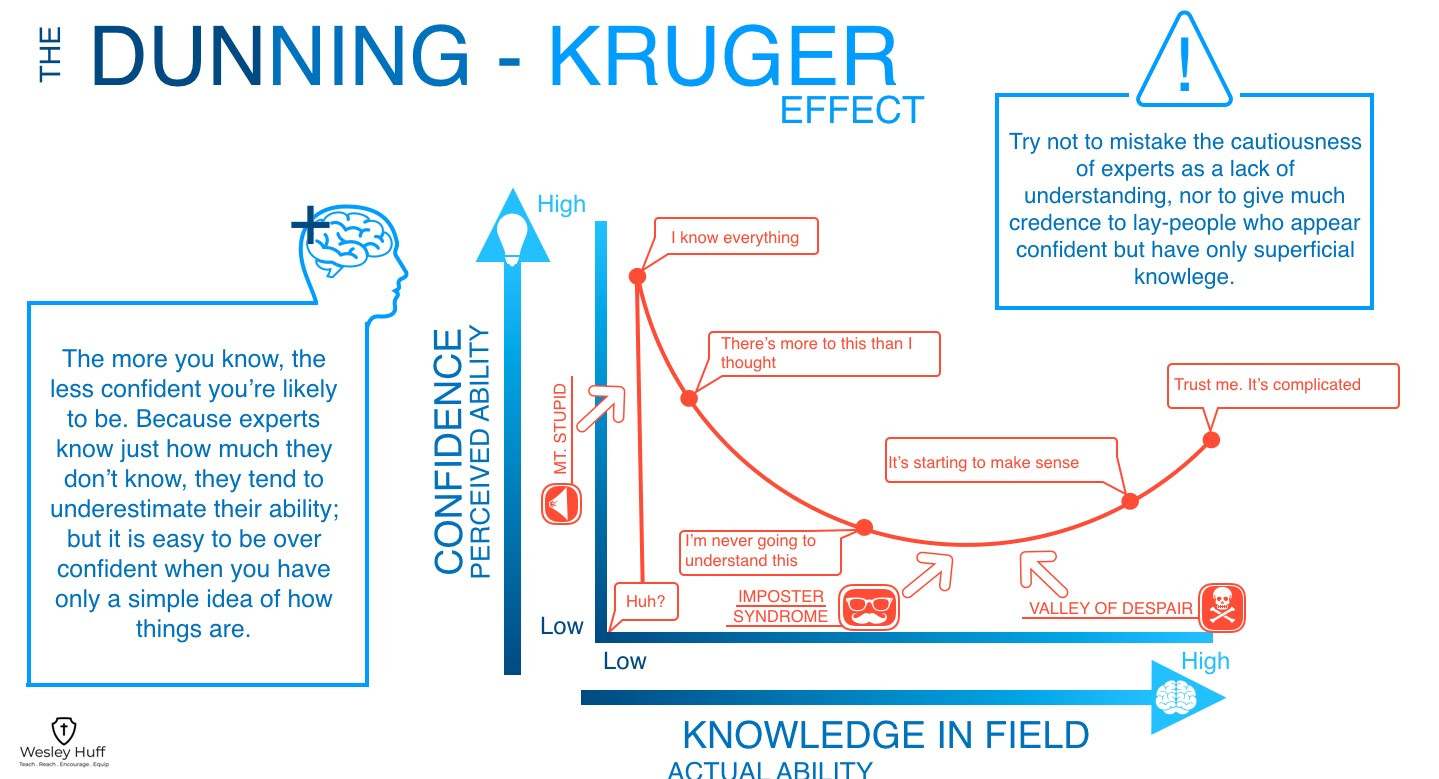
— graphic via a teacher at one of our daughters’ schools
.
The Dunning-Kruger effect is a cognitive bias where people with low ability in a task tend to overestimate their own competence, while high-ability individuals often underestimate theirs. This happens because those with low competence lack the metacognitive skills to recognize their own shortcomings, leading them to believe they are performing better than they are. Examples include a new driver who thinks they are better than average, or a novice who is confident in their ability to diagnose a medical issue based on a quick online search.
Examples in different fields
- Driving: Many drivers believe they are above average, a statistical impossibility.
- Healthcare: Patients may overestimate their ability to self-diagnose serious conditions after a quick search and disregard expert medical advice.
- Workplace: Employees may overestimate their performance compared to their colleagues.
- Social Media: The Dunning-Kruger effect can be seen online, where individuals with a superficial understanding of a topic may argue confidently with experts.