ACE receives ED funds to explore blockchain’s potential — from campustechnology.com by Rhea Kelly

Excerpt:

“This work is about exploring the potential of blockchain technology to give learners greater control over their educational records,” said Ted Mitchell, president of ACE, in a statement. “It’s about enabling more seamless transitions between and across K-12, higher education and the workforce. This initiative will explore how this nascent technology can break down barriers for opportunity seekers to fully unlock their learning and achievement.”


From DSC:
The items below are meant for those involved with digital transformation, developing strategy, and keeping one’s organization thriving into the future.


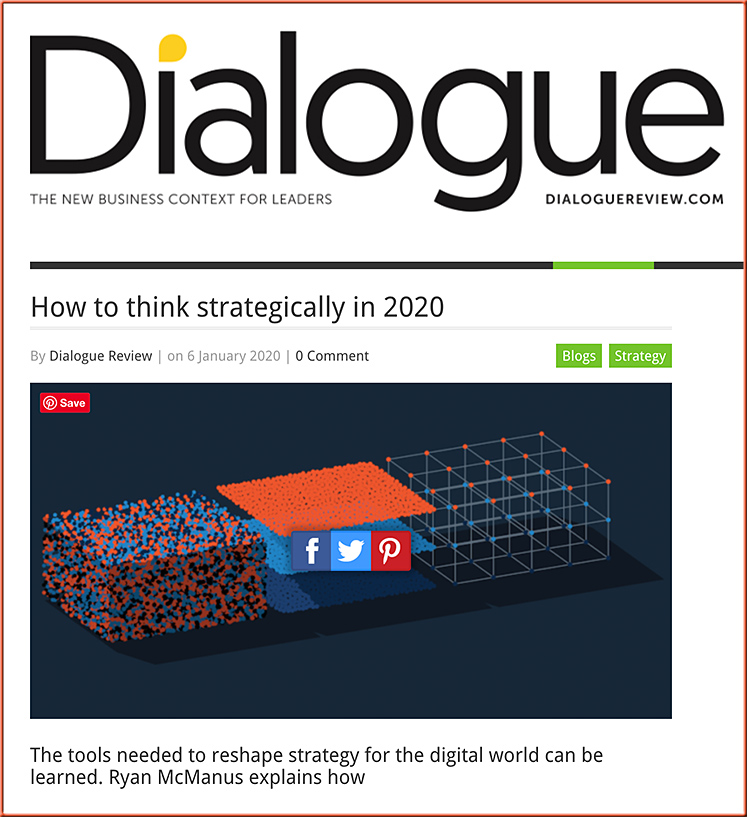
Strategy in the Digital Revolution with Ryan McManus — from dukece.com; with thanks to Laura Goodrich for this resource out on Twitter

Description of webinar:
Today, every business is focused on digital transformation, yet most organizations are struggling to realize value from their efforts and investments. Less than 20% of business leaders believe their digital transformation efforts have been successful. With unprecedented access to data and technology, how is it that firms and their leaders are experiencing such disappointing results?

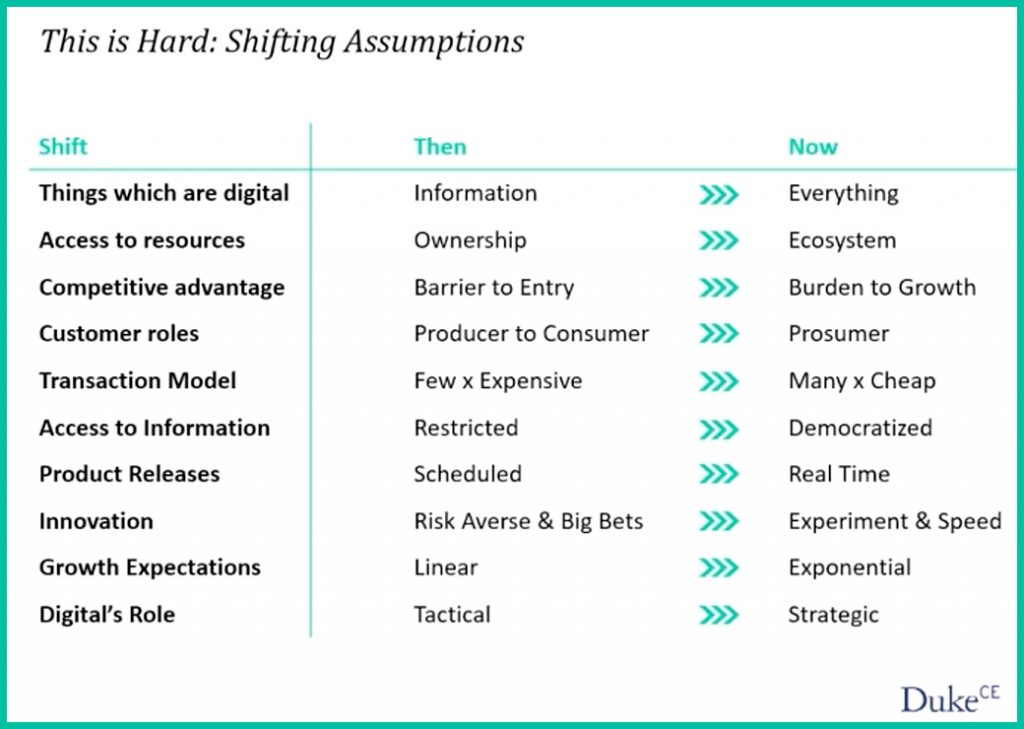
At the root of the problem is the disconnect between how leaders understand strategy and the new rules of the digital revolution. Most leaders haven’t been taught how to think about a world that is very different from the one which gave rise to popular strategic concepts, and as a result, they apply outdated strategy models and thinking to the new world, trying to squeeze the competitive realities of the digital revolution into linear, analog strategic planning concepts.

In this complimentary on-demand webinar, Ryan McManus, lecturer at Columbia University Business School and Duke Corporate Education, discusses the New Strategy Playbook, including:

  • The current state and evolution of the digital revolution, and what’s next
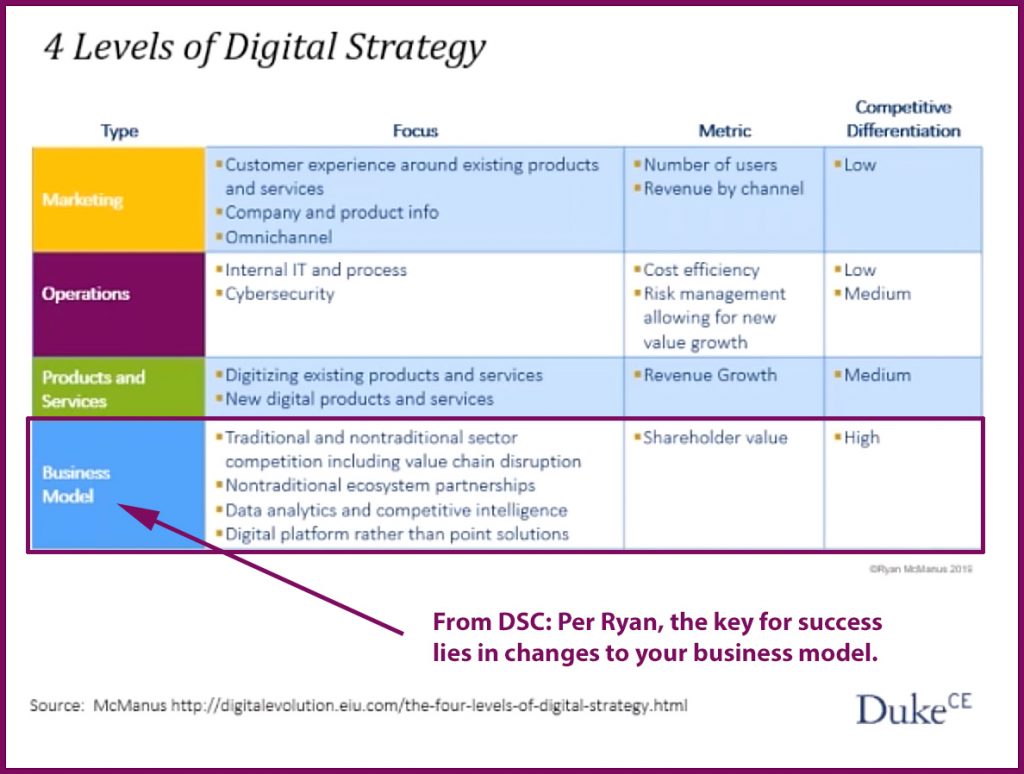
  • The four levels of digital strategy: how you can adapt your approach to win
  • Why traditional approaches to strategy have reached their limits
  • Implications for leadership development

Example slides:

Also see:

http://dialoguereview.com/how-to-think-strategically-in-2020/


The 2020 ABA Techshow

Also see:

EU Proposes Strict Regulations for AI — from futuretech360.com by John K. Waters

Excerpt:

The European Union this week unveiled its first proposed regulations for artificial intelligence (AI) technology, along with a strategy for handling personal digital data. The new regs provide guidance around such AI use cases as autonomous vehicles and biometric IDs.

Published online by the European Commission, the proposed regulations would apply to “high-risk” uses of AI in areas such as health care, transportation and criminal justice. The criteria to determine risk would include such considerations as whether a person might get hurt, say, by a self-driving car or a medical device, and how much influence a human has on an AI’s decision in areas like job recruiting and law enforcement.


 From DSC:
Here are two other example of AI’s further integration into the legal realm:

Casetext is Automating Litigation — from businesswire.com
Casetext’s new litigation automation technology, Compose, automates substantive legal work — and a substantial number of billable hours

Excerpt:

SAN FRANCISCO–(BUSINESS WIRE)–Casetext, the legal technology company known for its groundbreaking A.I. legal research platform, today announces a new product that will define litigation automation: Compose. Compose, which automates the first draft of a legal brief, is poised to disrupt the $437 billion1 legal services industry and fundamentally change our understanding of what types of professional work are uniquely human.


UC Irvine School of Law To Integrate Blue J Legal’s AI-Enabled Tax Platform into Curriculum
— from businesswire.com
First of its kind initiative aims to prepare graduate students for careers in tax law where AI will be integral to the decision-making process

The joint effort aims to demonstrate why advanced technological integration in higher education is important and how to leverage it, specifically in tax law.


© 2025 | Daniel Christian